
The 64 tribes of South Sudan are groups that share strong common interests and beliefs. They speak different but related languages, with English as the official language. Arabic is commonly used in Juba, while Nuer, Dinka, Bari, Azande, and Shilluk are spoken in different regions.
Modernity has affected these tribes in both positive and negative ways. In some areas, cultural traditions are declining, while in others, people remain deeply connected to their customs and norms, which have been passed down for centuries.
Some of the tribes include the Dinka, Nuer, Acholi, Azande, Bari, Aja, Baggara Arabs, Didinga, Kuku, Lokoya, Madi, Murle, Shilluk, Lango, Dungotona, and Fertit, among others.
The Dinka Tribe
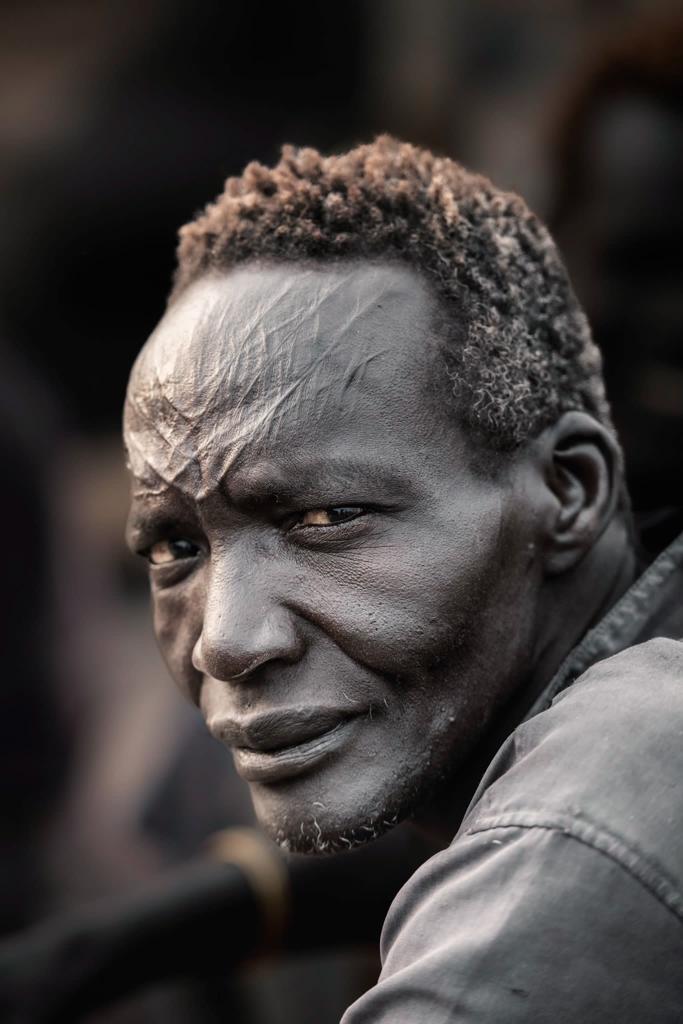
The Dinka are the largest tribe in South Sudan, making up 40% of the population. They do not have a centralized political authority but belong to independent clans that are interlinked.
They are part of the Nilotic ethnic group and are historically believed to have originated from the Bahr el Ghazal region.
They lived under the Kingdom of Alodia, a Christian multi-ethnic empire, which is now part of South Sudan.
The Dinka are known for their tall height. They are often compared to the Tutsi of Rwanda. A study found that the average height of 52 Dinka Agaar men was 182.6 cm, while a sample of 227 Dinka Ruweng men had an average height of 181.3 cm.
However, due to malnutrition and conflicts, the average height of Dinka males has declined.
The Nuer Tribe
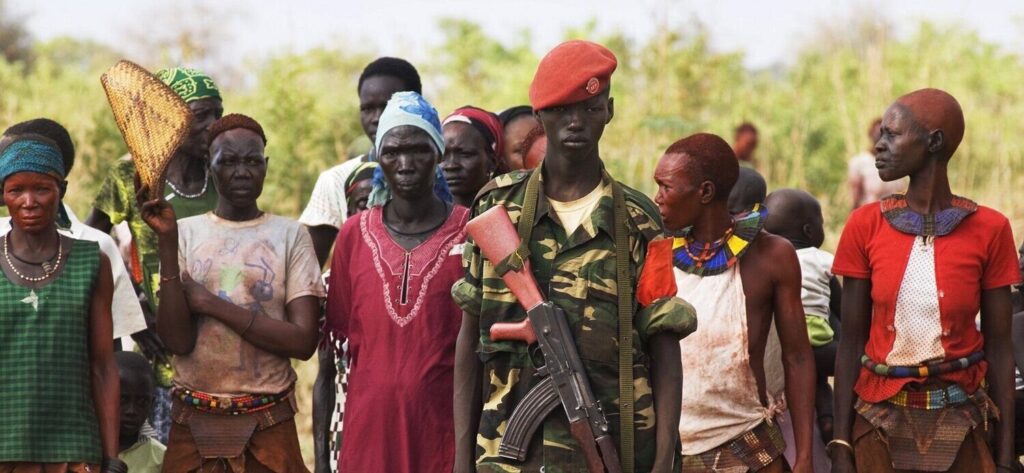
The Nuer, who call themselves “Nath,” have had conflicts with the Dinka over pasture and cattle. They belong to the Nilotic group of Bahr el Ghazal and have a strong attachment to their cattle, often treating them as companions.
It is believed that the Nuer split from the Dinka tribe and first settled in Southern Kordofan. However, they did not stay there for long. Due to natural disasters, they moved to the western edges of Ethiopia, displacing the Dinka, Anyuak, and Burun tribes.
In 2006, the Nuer joined the Murle in a fight for cattle. However, they were not successful because the SPLA confiscated their cattle, weakening their economy. This led to their downfall. In 2011, another group took the name White Army and continued fighting against the Murle tribe.
Cultural traditions remain strong among the Nuer. Teenage girls usually marry at 17 or 18 years old. They can choose their own husbands if the man has cattle, but in most cases, parents arrange marriages. The chosen husband is referred to as gol.
The Nuer believe in a god called Kuoth Nhial, whom they consider the spirit of the sky. They believe that when a person dies, the body remains on earth, while the soul goes to God in heaven and stays alive as a reflection or shadow.
The Acholi Tribe
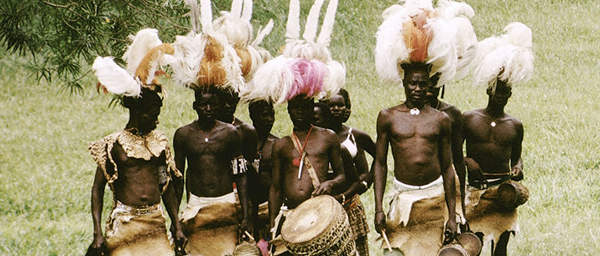
The Acholi are a Nilotic ethnic group from the Luo people. They live in Magwi County in South Sudan and Northern Uganda. Traditionally, they formed chiefdoms led by Rwodi, who came from the same clan.
However, this system declined after the British invaded the region. The British encouraged political and economic development, and during that period, the Acholi were used as manual laborers. This led to what is called a military ethnocracy.
After the 1950s, economic changes led many Acholi people to join the armed forces.
The Baka Tribe
The Baka people numbered around 25,000 in 1993. They are a Christian ethnic group from the Republic of Congo and Western Equatoria in South Sudan.
They also include people from Cameroon, Gabon, and South Sudan. Their language is a mixture of Cameroon dialects, Central Sudanic languages from South Sudan, and Gabonese languages.
The Azande Tribe

The Azande live in the southeastern part of the Central African Republic and the northeastern part of the Democratic Republic of the Congo. They speak the Azande language and are historically believed to have formed their kingdom through military conquests in the first half of the 18th century.
The Azande were divided into two groups: the Vungara and the non-Azande. After the death of a king, his sons often fought for power.
The losing son would leave and establish his own kingdom in a neighboring region. This caused the Azande people to spread eastward and northward.
The Azande were the last group to settle in the region, and unlike other tribes, they did not engage in agro-pastoral activities.
Learning never ends! Take a step and visit South Sudan to study these tribes practically by exploring their lands and traditions.


